A cure in the toxin…

Coley [from Starnes, 1992, Nature 357: 11-12]THE year is 1892, and in a small ward of the Memorial Hospital in New York City, a male patient lies dying. He has a large sarcoma (a type of cancerous tumour) that originated on his right arm, and been feverish for 12 hours. His fever isn’t due to the cancer though – it’s a result of an infection his physician gave him. The physician’s name is William B. Coley, and he recently administered an injection of ‘Coley’s toxins’, a potent mix of bacterial toxins that may cure the man of his cancer, but equally may also kill him.

William Coley had for some time observed that his patients experienced a regression in their cancer as a result of infection with a bacterial pathogen. Indeed, Coley had read publications that supported this observation, most notably with sarcoma patients suffering from erysipelas infection – an acute skin infection caused by Streptococcus bacteria. Based on these observations Coley engaged in a system of treatment that would have modern day ethics committees in apoplexy – he set about deliberately inducing erysipelas in his cancer patients.

There was no guarantee that erysipelas would take hold, or that it wouldn’t actually kill the patient. However, by all accounts Coley achieved some definitive results that led to him to further develop his treatment. He set upon the idea of killing the Streptococcus by heat-treatment, and collecting the bacterial extract to inject into the patient – an approach akin to early forms of vaccination – however, the results weren’t so impressive. It wasn’t until he combined the extract of his heat-killed Streptococcus with extract of another heat-killed bacteria, Serratia marcescans (another common cause of wound infections) that he noted reproducible clinical successes. This toxic brew of bacteria extracts was called ‘Coley’s toxins’.
Continue reading “A cure in the toxin…”

Mimicry: survival or flattery?…

This post was chosen as an Editor's Selection for ResearchBlogging.orgIF you hadn’t guessed already, I’m busy trying to write a paper at the moment. This being the case, I have managed to successfully postpone this onerous task by spending time reading other people’s papers. I’m now going to spend a little more time explaining one of them you, my lovely readers.

Many years ago, when I was a grad student, I found myself at an otherwise rather dull conference on nucleic acid research; but fortunately it was not a complete wash-out, a chance conversation with a grad student who happened to be presenting a poster on the adjacent board to mine introduced me to the world of molecular mimicry.

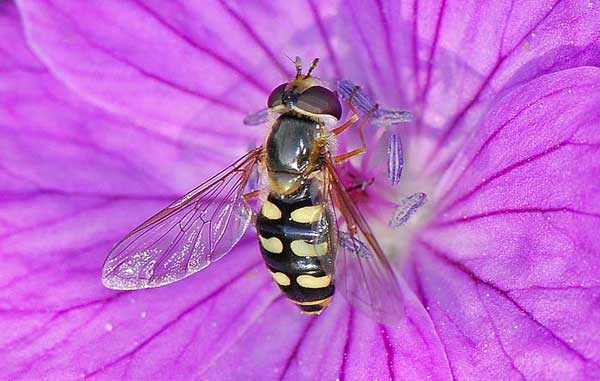
Hoverfly (via David Packman, hampshirecam.co.uk)So what is mimicry and why is it important in the natural world? Mimicry is the imitation of one species by another, with the most well known purpose being to avoid being eaten. Most people will have encountered hoverflies, and may in the first instance have mistaken them for a wasp or a bee; from an evolutionary perspective, predators such as birds have also learnt to associate these warning (aposematic) colours with a stinging or poisonous prey, and so the Hoverfly gets to fly another day.

Continue reading “Mimicry: survival or flattery?…”

Anatomy of (preparing to write) a scientific paper…

IT IS probable that most readers won’t know how much effort it takes to get the results of a scientific investigation in to press. After months and months of work, copious experiments, repetitions, frustrations, banging head against the wall, we enter the next phase – the paper. The effort of will, the to-ing and fro-ing from author to author, author to editor, author to reviewer, author to author, author to reviewer, through revisions and heartache, all so that 99.9% of the working population will never read it, never even know that it exists.

07.00 – Eager with anticipation I hit the computer. I then hit it again, and this time it starts. I’m at work and I’m using one of the institute’s computers. Last night I painstakingly arranged the four lab books I think I need, together with copious scraps of paper bearing notes and ideas for sentences, comments, discussion points. I’m ready to go.

All. I. Need. to. do. is. write. this. paper.

07.05 – [Waiting for computer] Cup of tea.

07.20 – Computer has finished loading. Quickly check emails.

13.00 – Lunchtime and all I’ve got to show for it is five open browser windows, each containing 12 tabs of web pages; an email-driven surf safari gone wrong, and haven’t written a word. Ok, quick lunch and then get down to it.

14.03 – Right: ‘Based on these observations we propose a model of incremental recognition layered specificity in the assembly of…

[Knocking at door] Lab mate: ‘Can you remind me how to use the Fluorescence spectrometer….?’

16.20 – ‘Based on these observations we propose a model of incremental recognition layered specificity in the for assembly of…

[Knocking at door] Lab mate: “Fancy a coffee?”

16.45‘Based on these observations we propose a model of layered specificity in the assembly of nucleosomal control complexes…

[Prof. walks in and sits down] Prof.: “The group in Bristol want the details of that construct we sent them, they’ve lost it, and they also want the other construct from last year, whatever it’s called, I mentioned it to them and they like the idea. I’m off shortly so could you get them away today?”

[Frantic searching through a year’s worth of meetings notes to identify what Prof means by ‘other construct’, then search archive freezer – once the lab manager has been found and the archive freezer key located. Realise that the sample was from July last year when I went on holiday, thus is poorly labelled as I was too excited to get out of the lab. Thirty minutes of cross-checking and I have the sample. Run to get items into last mail collection across campus in the mail centre.]

18.00 – ‘Based on these observations we propose a model of layered specificity incremental recognition in the assembly of nucleosomal control complexes…

[Decide to try working on a figure instead]

20.00 – Figure sorted. ‘Based on these observations we propose a model of layered specificity incremental recognition in the assembly of nucleosomal control complexes…

[Dinner]

22.00 ‘Based on these observations we suggest that the nucleosome assembles stochastically.

[Save. Shut down computer. Walk home]

22.30 – Realise that your plan to continue writing was foiled by forgetting the crucial lab note book. It’s either another figure, or bed. Decide on bed, but worth just checking emails/news/blogs briefly on laptop.

02.30Drearily close laptop. Collapse in to bed.

[Start the whole sorry affair again tomorrow].

Like this article? Please consider submitting it to Open Lab 2009:

Open Lab 2009

My take on Science Online London 2009…

[ratings]

Faraday lecture theatreI HAD good reasons for attending Science Online London 2009, not least of which was to meet – in person – some of the people whose blogs I’ve been reading for some time; and furthermore, how could I turn down an opportunity to spend a day at the Royal Institution of Great Britain. It is always interesting to discover the many cross-overs I shared with other delegates, shared experiences, desires and goals; in one case I found that I’d been working quite literally on top of a fellow blogger (Paolo!) at the same university for five years without once bumping in to him!

However, I am also a professional scientist, so I had a vested interest in some of the more technical discussions in the meeting; I am also passionate about science communication, thus with a varied programme covering the new media applications for science communication, it was bound to be good.

[More below the fold]

Continue reading “My take on Science Online London 2009…”

Science Online London: Day n-1…

I ARRIVED in London today ahead of tomorrow’s Science Onine 2009 meeting. Having a bizarrely uneventful travelling experience, both to and within London, was a great start. London in August seems to have a special kind of heat, hot and stuffy in a way that only large cities can be, but then you descend into the lower tube lines to discover yet a new flavour of heat, slow cooked.

I remember walking through the tube tunnels as a child and being deeply flustered, owing in part to having just seen ‘An American Werewolf in London’, and we all know what happens when you encounter a Werewolf in a tube tunnel don’t we? This time however I was too occupied thinking about the pressure differentials through the tube network as I enjoyed the tremendous cooling winds as you ascend the levels. Perspectives change.

The Albert Hall today

I’m staying next to the Albert Hall at Imperial College’s Beit Hall, with the above scene (taken today) available within 1 minute of leaving my room; a pretty good location really, near Knightsbridge, and opposite Hyde Park.

I have memorised the Piccadilly Line, so it will be my linear feature for navigating London this weekend. I got myself to Piccadilly Circus, and from there to The Royal Institution, and then on to Soho where I made a bee-line for Flat White (to finally renew my love for the antipodean ‘Flattie’ coffee), and get some food at Princi, a most excellent Italian delicatessen, owned by London’s Armani of bread.

Continue reading “Science Online London: Day n-1…”

On teaching lab skills…

[ratings]

I HAVE been applying for jobs in recent weeks, far and wide. The flavour of jobs that I’ve been looking at are teaching positions, some lectureships, and others senior tutor positions. One of the aspects of my jobs that I’ve enjoyed over the years is teaching people, especially teaching people how to do molecular cloning and protein biochemistry. I’ve looked after many final year project students, summer students, grad students and junior postdocs over the years, and enjoyed access to a diverse array of projects, seemingly linked by the need to clone, manipulate DNA in weird and wonderful ways and engineer protein.

Ever tried sticking a 5 nm gold nanoparticle onto a protein using an engineered cysteine? I have. Don’t ask.

As a grad student I spent many years demonstrating, which is a job that you can either throw yourself in to, or alternatively turn up, grunt a few times at the undergrads and take your money; I was of the former persuasion, though I certainly had plenty of the latter in my time as an undergrad.

It was always great fun having control of a bench of undergrads for a full year as you dragged them kicking and screaming through procedures and experiments, the like of which many of them will ever have to do again (even as research scientists). However, what sticks in my memory most of all were those times when the little darlings didn’t quite click with what they were supposed to be doing; there were sometimes truly spectacular lapses in common sense.

One incident took place during a microbiology skills practical. The class were to be learning about oil-immersion microscopy. They were told how the refraction of light through a glass sample slide prevents the use of higher resolution magnifications, but one way round this is to use oil with the same refractive index as glass. By using an oil layer between the lens and the slide, the refraction is lost and we can achieve higher magnification.

“Sir….?” (yes, they were freshers, still in ‘school-mode’)

“Jim. Yes? What’s the problem?”

“It doesn’t work, the samples are all fuzzy”

“Have you focussed them correctly?”

“The microscope won’t focus at all, it’s broken.”

“….so tell me again what you did exactly.”

It turned out they had taken oil-immersion rather literally and, having removed the high magnification lens from the microscope and filled it to the top with oil, they’d screwed the lens back onto the microscope and now had some problems.

“….! Erm, the oil goes on the top of the cover slip, on the glass slide you’re looking at, NOT in the microscope itself.”

As I said, great memories. Next time I’ll tell you about the group of lads who eagerly, and with great attention, streaked E. coli out to single colonies – directly onto the bench top (even though there were a stack of agar plates for them to use). The mind beggars.

WHO responds to Sense About Science…

EARLIER this year, Sense About Science, a charity that seeks to promote good science and evidence in public debate, submitted a letter to the World Health Organisation (WHO) asking them to clarify WHO’s position on the inappropriate use of homoeopathy for five serious diseases: HIV, TB, malaria, influenza and infant diarrhoea. The use of homoeopathy as a treatment for such conditions is inappropriate because, basically, it doesn’t work, and the promotion of homoeopathy as a preventative medicine in the developing world is immoral and unethical.

In the letter they cited current examples of homoeopathy being promoted for these diseases, which include:

  • In Kenya, the largest homeopathic supplier, the Abha Light Foundation sells homeopathic medicines for malaria, diarrhoea and influenza. It now runs 20 health centres, 25 mobile clinics and five HIV/AIDS clinics.
  • In Tanzania, Jeremy Sherr and Sigsbert Rwegasira run three homeopathic clinics and claim to have government support to establish a school of homeopathy. Rwegasira claims to treat “no less than 100 malaria patients per day.” According to Sherr’s promotional material, “conventional medicine only supplies temporary relief, often at a great cost financially, and with many severe side effects”.
  • In Ethiopia, the Amma Resonance Healing Foundation, run by Peter Chappell, offers to treat AIDS patients with “resonance healing in the form of homeopathy”, as “an ideal alternative and complement for the treatment of HIV/AIDS in developing countries” because of “the very low costs of producing the remedy” and because it has “no side effects”.
  • In Ghana, the Senya/Tamale Homeopathy Project treats malaria patients with homeopathy.
  • In Botswana, the Maun Homeopathy Project offers homeopathic treatment in several locations and mobile clinics for HIV related complaints such as herpes and diarrhoea “for those people who are HIV+ but who are not taking anti-retroviral drugs”.

Sense About Sense WHO's response

Today the WHO issued a response stating that it DOES NOT recommend the use of homoeopathy for treating HIV, TB, malaria, influenza and infant diarrhoea, with each of the departments tasked with tackling each of these five serious diseases clearly expressing WHO’s position.

Visit Sense About Science to read a briefing document about homoeopathy, so that you can better understand why it is that scientists and medics do not support its use in serious diseases.

Science 2.0…

INTERACTIVITY is key in the new Web 2.0 infrastructure, it’s what all the crazy cats are doing. The idea has now extended into the lecture theatre, with my university trialling a new system of student-lecturer interaction that one can only describe as ‘Lecture 2.0‘.

The particular technology being used is called Interwrite PRS, which is essentially a hand-held device lent to students for the year that can be employed to take part in impromptu quizzes and give feedback on the lecture. At the start of the lecture the students sign in using a key code, registering themselves with the computer at the front of the theatre. Points are awarded and recorded for both participation and for answering questions correctly.

Part of the aim is to get live feedback from the students; gone, hopefully, are the days when a question asked by the lecturer is met by a stony silence and a complete absence of hands being raised. It seems that generation X (or is it Y we’re on these days?) likes the anonymity of the web interface; and whilst it doesn’t necessarily address the need to be able to stand up in a crowd, it could in the long term engender greater confidence, and attention in lectures, as a result of participation.

One of the issues I wanted to raise around the Science Online London 2009 meeting is how we measure the impact of web-based science. Communicating science in the Web 2.0 infrastructure should mean that we can get real feedback on just how much people have understood what they read, or liked what they read. This isn’t to suggest that we start testing readers after every article of science writing.

We already have an open comments box, but in many respects this presents the horror of a blank piece of paper. Perhaps it would be worthwhile to construct an interactive feedback box that is more directed? Maybe something that is a third-party application that collates the feedback data from numerous science blogs? I’m sure there are plenty of tools out there in the blogosphere, but it would be nice to collate some independent data on the impact that science writers and science bloggers have.

In brief…(wry, ironic smile)

[ratings]

THIS weekend I will be attending the Science Online London meeting at the Royal Institution, where 150 delegates will be discussing science blogging and the nature of the web as a medium for the communication, practice and culture of science. It  also happens to be a year since I switched to my own installation of WordPress, and started what I’ve since referred to as a science blog. So I thought it might be a choice time to catalogue just some of the science I have been writing about in the past year.

LHC I started my ramblings last August, which was in time to comment on a report in Nature describing a virus that infects a virus, a virophage. The small virophage was called Sputnik, and it infects an enormous virus, called Mamavirus. This was an astounding piece of observational work, and having realised that such parasitism exists, and adjusted their views to the sizes of particles involved, the researchers reported that this phenomenon may be common in nature. Certainly, if parasitism is occurring at this scale, this may have major repercussions for what we understand about the biology and life-cycles of other important single-celled organisms that are also susceptible to viruses, such as algae. Algae are major players in the production of oxygen and fixing of carbon dioxide in the atmosphere, thus viruses that can (and do) infect algae could have indirectly influenced the state of our climate over the millennia.

Continue reading “In brief…(wry, ironic smile)”